Suspenders and Braces Difference: What Every Well-Dressed Man Should Know

Walk into any tailoring shop or men’s fashion forum, and you’ll encounter a debate that’s quietly divided style enthusiasts for decades. The suspenders and braces difference — or whether one even exists — is more nuanced than most people realize. Understanding this distinction isn’t just a matter of semantics. It touches on the history of formal dress, garment construction science, and the evolving language of men’s fashion accessories.

Are Suspenders and Braces the Same Thing?

The short answer is: almost, but not quite. Are suspenders and braces the same? In function, yes — both are garment accessories designed to hold trousers up by attaching to the waistband and running over the shoulders. But the terminology differs significantly based on geography and formality.

In British English, “braces” is the standard term. In American English, “suspenders” dominates everyday conversation. However, there’s a subtle distinction that goes beyond dialect. In the United States, “suspenders” can also refer to sock garters or other elastic straps used to hold up garments, whereas “braces” in the UK specifically refers to trouser-holding shoulder straps. This linguistic separation matters when discussing formal wear accessories, because precision signals knowledge and confidence in dress.

From a garment engineering standpoint, men’s braces are typically constructed from woven elastic or ribbon material, with either leather-ended clips or button attachments. Research into textile mechanics shows that woven elastic distributes tension more evenly than simple rubber bands, reducing fabric stress at attachment points. This is particularly relevant when wearing braces vs suspenders made from different materials — higher quality construction directly impacts both comfort and the longevity of your trousers.

The Science Behind Wearing Braces vs Suspenders for Suits

Tailors and fit specialists have long argued that suspenders for suits offer a superior trouser hang compared to belts. The reasoning is grounded in basic physics. A belt cinches the waist, creating inward compression that can bunch fabric, shift trouser creases, and disrupt the clean drape that bespoke tailoring is designed to achieve. Men’s suspenders, by contrast, support the trouser from above, allowing the fabric to fall naturally under gravity.

Studies in ergonomics and occupational health have also suggested that suspending trousers from the shoulders rather than the hips can reduce lower back strain over long periods of wear — a small but meaningful benefit for professionals spending hours at a desk or on their feet. This functional advantage helps explain why men’s braces have remained a staple in legal, financial, and diplomatic circles where formal attire is a daily requirement.

When navigating the suspenders vs braces debate in terms of style, the attachment method matters enormously. Button-on braces, which require buttons sewn inside the trouser waistband, are considered the more formal and aesthetically refined option. They lie flatter, look cleaner beneath a jacket, and signal an understanding of true tailoring tradition. Clip-on versions are more practical and accessible, making them the preferred choice for the best suspenders for men who need versatility across multiple pairs of trousers.

How to Wear Suspenders and Choose the Right Pair

Knowing how to wear suspenders correctly can elevate an entire outfit or undermine it. The cardinal rule is simple: never wear a belt and braces simultaneously. This is not just a fashion faux pas — it’s a logical contradiction. If your trousers are being held by braces, a belt serves no functional purpose and creates visual clutter at the waist.

Width is another consideration governed by both aesthetics and function. Narrower straps, around half an inch wide, tend to suit lighter-weight fabrics and more casual occasions. Wider braces, at one to one-and-a-quarter inches, pair best with formal suiting and project a more authoritative, classic menswear accessories (wikimontessori.com) appearance. Color coordination follows the same principles applied to other suit accessories — matching or complementing the tie, pocket square, or even the shirt can create a cohesive, intentional look.

Pattern plays a role too. Solid-colored braces in navy, black, burgundy, or grey are the safest and most versatile choices for formal wear. Subtle stripes or woven textures add personality without overwhelming an ensemble. Loud novelty prints, while occasionally appropriate for creative environments or social occasions, rarely belong in traditional professional settings.

The positioning of the straps also affects both comfort and appearance. The Y-back configuration — where two front straps join into a single strap at the back — is the traditional formal arrangement and tends to sit more securely on the shoulders. The X-back configuration, where straps cross at the mid-back, is slightly more casual and offers an alternative fit for broader or narrower shoulder widths.

Suspenders and Braces Difference in Modern Men’s Fashion

Contemporary menswear has seen a meaningful revival of men’s braces, moving them from purely functional undergarments to visible style statements. Fashion designers and style editors have embraced the aesthetic of visible braces worn over dress shirts in smart-casual contexts, a trend that bridges workwear and evening dressing.

This shift reflects a broader movement in men’s fashion accessories toward considered, purposeful dressing. Where accessories were once seen as optional extras, modern style thinking treats each element — including braces — as integral to the overall composition of an outfit. Wearing braces thoughtfully communicates self-awareness, attention to detail, and an appreciation for tailoring tradition.

For men new to formal wear accessories, starting with a versatile pair of solid-colored, clip-on braces in a neutral tone is the most practical entry point. From there, investing in a button-on pair made from quality woven silk or grosgrain ribbon represents a genuine upgrade that most experienced dressers would notice and appreciate.

Understanding the suspenders and braces difference is ultimately about more than vocabulary. It reflects a deeper engagement with how clothes work, how they’re constructed, and how small details compound into a complete and confident personal style. Whether you call them braces or suspenders, wearing them well is a skill worth developing — one that pays dividends in how you look, how your clothing performs, and how you carry yourself in every room you walk into.
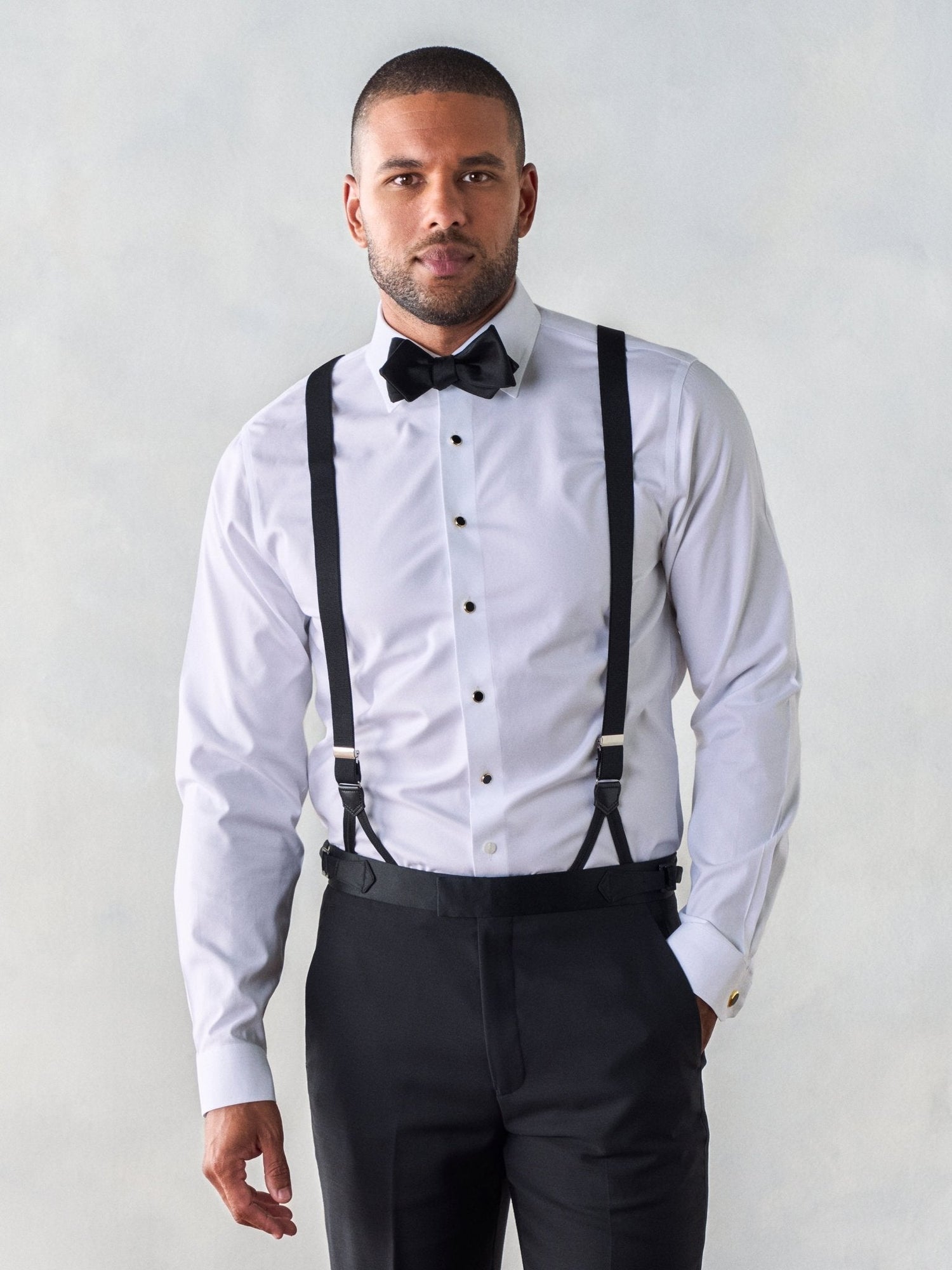
Suspenders vs Braces: The Complete Buying Guide for Men Who Want to Dress Sharp

Walk into any well-stocked men’s department and you will find yourself standing in front of a wall of elastic straps, leather clips, and button attachments — and possibly wondering whether you are looking at suspenders or braces. This confusion is more common than most men admit. The truth is that the suspenders vs braces debate is partly a matter of geography, partly a matter of style history, and entirely worth understanding if you care about dressing well. Whether you are building a formal wardrobe or simply trying to keep your trousers where they belong, this guide will walk you through everything you need to know.

Are Suspenders and Braces the Same Thing?

Yes and no — and the answer depends largely on where you live. In American English, the word suspenders refers to the straps worn over the shoulders to hold up trousers. In British English, the same garment is called braces, while suspenders in the UK refer to something else entirely: the garter straps women use to hold up stockings. So when people ask are suspenders and braces the same, the honest answer is that they describe the same shoulder-strap trouser support in most modern contexts, particularly in menswear discussions. The suspenders and braces difference is essentially linguistic, not functional.

That said, some style purists do draw a distinction between the two terms based on construction. Traditional men’s braces — particularly those worn with formal suits — are typically made from woven silk or high-quality elastic, feature a Y-back design, and attach to the trousers via leather tabs sewn directly onto the waistband. Clip-on versions, which grip the trouser waistband from the outside, are more commonly associated with the American suspenders tradition. In formal classic menswear accessories; http://cgi.www5c.biglobe.ne.jp/~fins/cgi-bin/fantasy_tmp.cgi, circles, button-on braces are considered the more refined and correct choice.

How to Choose the Best Suspenders for Men

Finding the best suspenders for men means understanding the occasion, the materials, and the construction. Start with the back style. A Y-back design is the traditional choice and distributes weight evenly across the shoulders. An X-back is equally functional and suits a more casual or workwear aesthetic. For suits and formal wear accessories, the Y-back is almost always the correct call.

Material matters enormously. Woven silk or jacquard elastic gives men’s braces a polished, textured look that works beautifully under a suit jacket. Leather end pieces — the small strips that connect to the trouser buttons — should be genuine leather and ideally match your belt or shoe color, even though you should not actually be wearing both a belt and braces at the same time. That is a genuine style rule. Braces are designed to replace the belt entirely, not accompany it.

Width is another consideration that men often overlook. A width of around one inch is ideal for most formal and business settings. Wider straps, sometimes reaching an inch and a half, work well in casual or heritage-inspired outfits. Thinner straps can look elegant but may not hold heavier fabric trousers as reliably.

Suspenders for Suits: Getting the Formality Right

When wearing suspenders for suits, the fit of the trousers becomes even more important. Men’s suspenders work best with trousers that have a slightly higher rise — around the natural waist rather than the hips. This cut was the standard for tailored trousers throughout most of the twentieth century, and it pairs with braces in a way that looks both intentional and elegant.

The color and pattern of your men’s braces should complement your outfit without competing with it. Solid colors in navy, burgundy, black, or forest green are reliable choices that work with a wide range of suit colors. If your tie or pocket square already features a pattern, keep the braces solid. If your shirt and tie are relatively understated, a subtle stripe or woven pattern on the braces can add visual interest. These small decisions are what separate men who wear suit accessories from men who truly understand men’s fashion accessories.

Clip-on vs button-on is not just an aesthetic debate — it affects how the trouser hangs. Button-on braces hold the trousers from a fixed point, allowing the fabric to drape naturally and cleanly. Clip-ons can bunch the waistband slightly, which becomes visible under a fitted jacket. If you are investing in quality trousers and suits, it is worth having a tailor add brace buttons to the waistband. It is a small alteration that makes a significant difference.

How to Wear Suspenders with Confidence

Knowing how to wear suspenders properly is mostly about understanding what not to do. Never wear them with a belt — it is redundant and looks confused. Keep the jacket on when possible, since braces are technically an undergarment in the sense that they are meant to be part of a complete look rather than a standalone feature. When you remove your jacket at the office or a reception, braces can look intentional and stylish, but make sure your shirt is fitted and tucked neatly.

Adjust the length so the straps sit comfortably on your shoulders without pulling too tightly. Overly tight braces will cause your trousers to ride up, and that negates the whole purpose of wearing them well. Most quality men’s suspenders include a simple adjustment slider on each strap.

Braces vs Suspenders: The Final Word

The braces vs suspenders conversation ultimately comes down to context and quality. If you are in North America, you are likely using both words interchangeably to describe the same product. If you are shopping for formal wear, lean toward the British-derived tradition of button-on, woven braces for the most polished result. If you are dressing casually, a well-made clip-on pair in a complementary color gets the job done without the need for trouser alterations.

What matters most is that men’s suspenders, worn correctly and chosen carefully, are one of the most elegant and practical men’s fashion accessories available. They improve posture, keep trousers properly positioned, and add a layer of considered style that a belt simply cannot match. Whether you call them suspenders or braces, the effect — when done right — is timeless.

Suspenders and Braces Difference: What Every Well-Dressed Man Should Know

Walk into any tailoring shop or men’s fashion forum, and you’ll encounter a debate that’s quietly divided style enthusiasts for decades. The suspenders and braces difference — or whether one even exists — is more nuanced than most people realize. Understanding this distinction isn’t just a matter of semantics. It touches on the history of formal dress, garment construction science, and the evolving language of men’s fashion accessories.

Are Suspenders and Braces the Same Thing?

The short answer is: almost, but not quite. Are suspenders and braces the same? In function, yes — both are garment accessories designed to hold trousers up by attaching to the waistband and running over the shoulders. But the terminology differs significantly based on geography and formality.

In British English, “braces” is the standard term. In American English, “suspenders” dominates everyday conversation. However, there’s a subtle distinction that goes beyond dialect. In the United States, “suspenders” can also refer to sock garters or other elastic straps used to hold up garments, whereas “braces” in the UK specifically refers to trouser-holding shoulder straps. This linguistic separation matters when discussing formal wear accessories, because precision signals knowledge and confidence in dress.

From a garment engineering standpoint, men’s suit accessories – https://citiesofthedead.net – braces are typically constructed from woven elastic or ribbon material, with either leather-ended clips or button attachments. Research into textile mechanics shows that woven elastic distributes tension more evenly than simple rubber bands, reducing fabric stress at attachment points. This is particularly relevant when wearing braces vs suspenders made from different materials — higher quality construction directly impacts both comfort and the longevity of your trousers.

The Science Behind Wearing Braces vs Suspenders for Suits

Tailors and fit specialists have long argued that suspenders for suits offer a superior trouser hang compared to belts. The reasoning is grounded in basic physics. A belt cinches the waist, creating inward compression that can bunch fabric, shift trouser creases, and disrupt the clean drape that bespoke tailoring is designed to achieve. Men’s suspenders, by contrast, support the trouser from above, allowing the fabric to fall naturally under gravity.

Studies in ergonomics and occupational health have also suggested that suspending trousers from the shoulders rather than the hips can reduce lower back strain over long periods of wear — a small but meaningful benefit for professionals spending hours at a desk or on their feet. This functional advantage helps explain why men’s braces have remained a staple in legal, financial, and diplomatic circles where formal attire is a daily requirement.

When navigating the suspenders vs braces debate in terms of style, the attachment method matters enormously. Button-on braces, which require buttons sewn inside the trouser waistband, are considered the more formal and aesthetically refined option. They lie flatter, look cleaner beneath a jacket, and signal an understanding of true tailoring tradition. Clip-on versions are more practical and accessible, making them the preferred choice for the best suspenders for men who need versatility across multiple pairs of trousers.

How to Wear Suspenders and Choose the Right Pair

Knowing how to wear suspenders correctly can elevate an entire outfit or undermine it. The cardinal rule is simple: never wear a belt and braces simultaneously. This is not just a fashion faux pas — it’s a logical contradiction. If your trousers are being held by braces, a belt serves no functional purpose and creates visual clutter at the waist.

Width is another consideration governed by both aesthetics and function. Narrower straps, around half an inch wide, tend to suit lighter-weight fabrics and more casual occasions. Wider braces, at one to one-and-a-quarter inches, pair best with formal suiting and project a more authoritative, classic appearance. Color coordination follows the same principles applied to other suit accessories — matching or complementing the tie, pocket square, or even the shirt can create a cohesive, intentional look.

Pattern plays a role too. Solid-colored braces in navy, black, burgundy, or grey are the safest and most versatile choices for formal wear. Subtle stripes or woven textures add personality without overwhelming an ensemble. Loud novelty prints, while occasionally appropriate for creative environments or social occasions, rarely belong in traditional professional settings.

The positioning of the straps also affects both comfort and appearance. The Y-back configuration — where two front straps join into a single strap at the back — is the traditional formal arrangement and tends to sit more securely on the shoulders. The X-back configuration, where straps cross at the mid-back, is slightly more casual and offers an alternative fit for broader or narrower shoulder widths.

Suspenders and Braces Difference in Modern Men’s Fashion

Contemporary menswear has seen a meaningful revival of men’s braces, moving them from purely functional undergarments to visible style statements. Fashion designers and style editors have embraced the aesthetic of visible braces worn over dress shirts in smart-casual contexts, a trend that bridges workwear and evening dressing.

This shift reflects a broader movement in men’s fashion accessories toward considered, purposeful dressing. Where accessories were once seen as optional extras, modern style thinking treats each element — including braces — as integral to the overall composition of an outfit. Wearing braces thoughtfully communicates self-awareness, attention to detail, and an appreciation for tailoring tradition.

For men new to formal wear accessories, starting with a versatile pair of solid-colored, clip-on braces in a neutral tone is the most practical entry point. From there, investing in a button-on pair made from quality woven silk or grosgrain ribbon represents a genuine upgrade that most experienced dressers would notice and appreciate.

Understanding the suspenders and braces difference is ultimately about more than vocabulary. It reflects a deeper engagement with how clothes work, how they’re constructed, and how small details compound into a complete and confident personal style. Whether you call them braces or suspenders, wearing them well is a skill worth developing — one that pays dividends in how you look, how your clothing performs, and how you carry yourself in every room you walk into.

Braces vs Suspenders: The Complete Guide to Wearing Them Right With Your Suit

Walk into any well-dressed gathering and you might notice a handful of men with something extra going on above the belt line. That something is a pair of braces — or suspenders, depending on where you grew up. The debate around braces vs suspenders is more than just a vocabulary argument. It touches on style, formality, function, and the fine art of pulling together a polished look. Whether you’re dressing for a wedding, a board meeting, or a smart-casual weekend event, understanding how these accessories work and when to wear them can genuinely elevate your wardrobe game.

Are Suspenders and Braces the Same Thing?

This is probably the most common question men have when they first start exploring this category of accessories. The short answer is yes — suspenders and braces are the same thing. The difference is purely regional. In the United States, the word “suspenders” is the everyday term. In the United Kingdom and much of Europe, the same accessory is called “braces.” So when tailoring publications talk about men’s braces or when American retailers advertise men’s suspenders, they’re referring to identical products that serve the same purpose: holding your trousers up without a belt.

That said, there is one important suspenders and braces difference worth knowing. In British English, the word “suspenders” actually refers to garter straps used to hold up stockings. So if you’re shopping in the UK or reading British style guides, keep your terminology straight to avoid confusion. Outside of that quirk, suspenders vs braces is simply a matter of accent.

Choosing the Best Suspenders for Men: What Actually Matters

Not all men’s suspenders are created equal, and the differences matter more than most people expect. The first thing to consider is construction. Clip-on versions attach to the waistband of your trousers and are widely available, but they’re generally considered the less refined option. Button-on braces, which require small buttons sewn inside the waistband, are the traditional choice and are far superior for formal wear. They distribute weight more evenly, stay in place better, and simply look more intentional and elegant.

Width is another practical consideration. Narrower braces in the range of half an inch to three-quarters of an inch tend to work well for slim or tailored suits and more formal occasions. Wider styles, typically around an inch to an inch and a half, suit casual or country-style outfits. For most suit-wearing situations, a medium width strikes the right balance.

Material also plays a significant role. Silk or woven fabric braces are the gold standard for formal occasions. Elastic versions with a bit of stretch are more comfortable for all-day wear and suit less formal settings. The hardware — the metal clasps and adjusters — should be brushed silver, antique silver, or gold depending on your other accessories. Mixing metals carelessly is one of the easiest ways to undercut an otherwise strong look.

How to Wear Suspenders With a Suit: The Practical Guide

Learning how to wear suspenders properly is less complicated than it sounds, but there are a few firm rules worth following. The most important one: never wear suspenders with a belt. This is a cardinal sin in men’s fashion accessories. Braces exist to replace a belt, not to accompany one. Wearing both simultaneously suggests you don’t trust your own outfit, and it creates a cluttered, uncertain aesthetic.

When wearing suspenders for suits, your trousers should ideally be cut slightly higher in the rise than standard off-the-rack options. High-rise trousers pair beautifully with braces because the fabric sits smoothly, the braces have the right angle to hold the trousers in place, and the overall silhouette is clean and intentional. If your trousers have belt loops, tuck them away or opt for a pair specifically designed for brace-wearing.

The X-back configuration is the classic choice for formal wear accessories. This means the two back straps cross over each other between the shoulder blades before connecting to the rear waistband. The Y-back style, where the straps meet at a single central point before splitting downward, is also acceptable but leans slightly more casual. For a suit accessory ideas, vtaas-benchmark.com,, go with the X-back when in doubt.

Color coordination is where personal style enters the picture. For conservative professional settings, braces in navy, charcoal, burgundy, or forest green pair elegantly with most suit colors. For celebrations, weddings, or less formal occasions, you have more room to experiment with patterns, textures, and bolder colors. The key is ensuring the braces connect at least loosely to something else in your outfit — a pocket square, a tie, or the suit lining itself.

Braces vs Suspenders in Modern Men’s Fashion

The resurgence of interest in classic men’s fashion accessories has brought braces back into mainstream conversations about dressing well. They are no longer considered old-fashioned or exclusively the domain of pinstripe-wearing bankers. Contemporary men’s fashion has embraced them as a distinctive and confident style choice that signals a genuine interest in dressing with intention.

They work particularly well for men who prefer to dress without a tie, since braces add a vertical visual element that structured suits naturally benefit from. They also solve a very real practical problem for men with a larger build or a difference in waist and hip measurements — a belt can create bunching or discomfort that a well-fitted pair of braces eliminates entirely.

Fashionable retro dressed man with cap, suspenders and eyeglasses standing on city street and looking at side. Low angle view

Tucking in your shirt fully and ensuring the braces are adjusted so they hold the trousers at exactly the right height are the final practical steps before stepping out. The braces should feel snug but not tight, pulling the trousers gently upward rather than straining against them.

Making the Case for Wearing Braces

The braces vs suspenders debate ultimately comes down to language, not style. Whatever you call them, these accessories represent one of the most versatile and distinguished additions to a well-considered wardrobe. They are practical first, elegant by design, and when worn correctly, immediately communicate a level of care and attention that separates genuinely stylish men from those simply wearing clothes. Start with a quality pair in a classic color, pair them with well-fitted trousers, and leave the belt in the drawer where it belongs.

Suspenders and Braces Difference: What Every Well-Dressed Man Should Know

Walk into any tailoring shop or men’s fashion forum, and you’ll encounter a debate that’s quietly divided style enthusiasts for decades. The suspenders and braces difference — or whether one even exists — is more nuanced than most people realize. Understanding this distinction isn’t just a matter of semantics. It touches on the history of formal dress, garment construction science, and the evolving language of men’s fashion accessories.

Are Suspenders and Braces the Same Thing?

The short answer is: almost, but not quite. Are suspenders and braces the same? In function, yes — both are garment accessories designed to hold trousers up by attaching to the waistband and running over the shoulders. But the terminology differs significantly based on geography and formality.

In British English, “braces” is the standard term. In American English, “suspenders” dominates everyday conversation. However, there’s a subtle distinction that goes beyond dialect. In the United States, “suspenders” can also refer to sock garters or other elastic straps used to hold up garments, whereas “braces” in the UK specifically refers to trouser-holding shoulder straps. This linguistic separation matters when discussing formal wear accessories, because precision signals knowledge and confidence in dress.

From a garment engineering standpoint, men’s braces are typically constructed from woven elastic or ribbon material, with either leather-ended clips or button attachments. Research into textile mechanics shows that woven elastic distributes tension more evenly than simple rubber bands, reducing fabric stress at attachment points. This is particularly relevant when wearing braces vs suspenders made from different materials — higher quality construction directly impacts both comfort and the longevity of your trousers.

The Science Behind Wearing Braces vs Suspenders for Suits

Tailors and fit specialists have long argued that suspenders for suits offer a superior trouser hang compared to belts. The reasoning is grounded in basic physics. A belt cinches the waist, creating inward compression that can bunch fabric, shift trouser creases, and disrupt the clean drape that bespoke tailoring is designed to achieve. men’s suit accessories; https://citiesofthedead.net/index.php/User:TangelaDiederich, suspenders, by contrast, support the trouser from above, allowing the fabric to fall naturally under gravity.

Studies in ergonomics and occupational health have also suggested that suspending trousers from the shoulders rather than the hips can reduce lower back strain over long periods of wear — a small but meaningful benefit for professionals spending hours at a desk or on their feet. This functional advantage helps explain why men’s braces have remained a staple in legal, financial, and diplomatic circles where formal attire is a daily requirement.

When navigating the suspenders vs braces debate in terms of style, the attachment method matters enormously. Button-on braces, which require buttons sewn inside the trouser waistband, are considered the more formal and aesthetically refined option. They lie flatter, look cleaner beneath a jacket, and signal an understanding of true tailoring tradition. Clip-on versions are more practical and accessible, making them the preferred choice for the best suspenders for men who need versatility across multiple pairs of trousers.

How to Wear Suspenders and Choose the Right Pair

Knowing how to wear suspenders correctly can elevate an entire outfit or undermine it. The cardinal rule is simple: never wear a belt and braces simultaneously. This is not just a fashion faux pas — it’s a logical contradiction. If your trousers are being held by braces, a belt serves no functional purpose and creates visual clutter at the waist.

Width is another consideration governed by both aesthetics and function. Narrower straps, around half an inch wide, tend to suit lighter-weight fabrics and more casual occasions. Wider braces, at one to one-and-a-quarter inches, pair best with formal suiting and project a more authoritative, classic appearance. Color coordination follows the same principles applied to other suit accessories — matching or complementing the tie, pocket square, or even the shirt can create a cohesive, intentional look.

Pattern plays a role too. Solid-colored braces in navy, black, burgundy, or grey are the safest and most versatile choices for formal wear. Subtle stripes or woven textures add personality without overwhelming an ensemble. Loud novelty prints, while occasionally appropriate for creative environments or social occasions, rarely belong in traditional professional settings.

The positioning of the straps also affects both comfort and appearance. The Y-back configuration — where two front straps join into a single strap at the back — is the traditional formal arrangement and tends to sit more securely on the shoulders. The X-back configuration, where straps cross at the mid-back, is slightly more casual and offers an alternative fit for broader or narrower shoulder widths.

Suspenders and Braces Difference in Modern Men’s Fashion

Contemporary menswear has seen a meaningful revival of men’s braces, moving them from purely functional undergarments to visible style statements. Fashion designers and style editors have embraced the aesthetic of visible braces worn over dress shirts in smart-casual contexts, a trend that bridges workwear and evening dressing.

This shift reflects a broader movement in men’s fashion accessories toward considered, purposeful dressing. Where accessories were once seen as optional extras, modern style thinking treats each element — including braces — as integral to the overall composition of an outfit. Wearing braces thoughtfully communicates self-awareness, attention to detail, and an appreciation for tailoring tradition.

For men new to formal wear accessories, starting with a versatile pair of solid-colored, clip-on braces in a neutral tone is the most practical entry point. From there, investing in a button-on pair made from quality woven silk or grosgrain ribbon represents a genuine upgrade that most experienced dressers would notice and appreciate.

Understanding the suspenders and braces difference is ultimately about more than vocabulary. It reflects a deeper engagement with how clothes work, how they’re constructed, and how small details compound into a complete and confident personal style. Whether you call them braces or suspenders, wearing them well is a skill worth developing — one that pays dividends in how you look, how your clothing performs, and how you carry yourself in every room you walk into.

The Best Suspenders for Men: Your Complete Guide to Braces as Suit Accessories

Few accessories in menswear carry the same quiet confidence as a well-chosen pair of suspenders. Whether you’ve spotted them on a sharp-dressed colleague or noticed them making a comeback on the runway, there’s good reason to pay attention. The best suspenders for men do more than hold trousers in place — they complete an outfit in a way that a belt simply cannot. But before you invest, there are some common questions worth answering. What exactly are braces? Are suspenders and braces the same thing? And how do you wear them properly with a suit?

Are Suspenders and Braces the Same Thing?

This is probably the most frequently asked question in men’s braces vs suspenders – qoqs.ru, fashion accessories circles, and the answer is straightforward. Yes, suspenders and braces are the same thing. The suspenders vs braces debate is really just a matter of geography. In the United States, the garment is almost universally called suspenders. In the United Kingdom and much of Europe, the preferred term is braces. The suspenders and braces difference, then, is nothing more than regional language preference — there is no functional or stylistic distinction between the two words. Both refer to the same accessory: a set of straps that run over the shoulders to hold up trousers.

Some people believe braces sound more formal and suspenders more casual. That perception exists, but it reflects cultural familiarity rather than any real difference in the product. When shopping for men’s braces or men’s suspenders, you’re looking at the same category of item, just labeled differently depending on where you’re buying.

Choosing the Best Suspenders for Men: What to Look For

When selecting suspenders for suits, quality matters more than most men initially realize. The fabric, hardware, and clip or button mechanism all contribute to how the accessory looks and functions throughout the day. Here’s what to keep in mind.

Fabric is the starting point. Silk or woven wool suspenders are the gold standard for formal wear accessories. They drape well, hold their shape, and complement the texture of a quality suit. Elastic suspenders are common and widely available, but for true elegance, a woven fabric option is worth the extra investment. Width matters too — 1.25 to 1.5 inches is the sweet spot for most suit jackets, offering a balanced look without appearing overpowering.

The attachment mechanism is another key consideration. Clip-on suspenders are convenient and versatile, attaching to the waistband without any modification to the trousers. Button suspenders, however, are considered the more refined option. They attach to small buttons sewn inside the waistband of the trousers and lie flatter against the body. Many tailored trousers come with these buttons already in place, and having them added to existing trousers is a simple alteration.

Color coordination is where personal expression comes in. Classic choices like navy, charcoal, black, and burgundy work across almost any suit. If you’re newer to wearing men’s braces, a neutral tone matched to your trousers or tie is a reliable approach. Once you feel comfortable, a contrasting color or subtle pattern — like a thin stripe or herringbone weave — adds depth to the overall look.

How to Wear Suspenders Correctly With a Suit

Understanding how to wear suspenders properly is what separates a polished look from an awkward one. The most important rule is simple: never wear suspenders and a belt at the same time. Suspenders are designed to hold your trousers up on their own. Wearing both creates visual clutter and suggests you don’t trust the suspenders to do their job — which defeats the purpose entirely.

Suspenders should be worn under the jacket, not displayed over a shirt as a standalone statement piece (unless you’re going for a deliberately casual or fashion-forward look). In formal settings, the jacket covers the braces almost entirely, with only a glimpse visible if the jacket opens. This subtlety is part of their appeal in suit wearing. The fit should allow your trousers to sit naturally at the waist — not pulled too high or sagging. Adjust the length of each strap so the trousers hang with a gentle, comfortable drape.

When it comes to suit accessories overall, braces work particularly well with high-waisted or pleated trousers, which are themselves experiencing a well-deserved revival. The combination of a high rise trouser and a quality pair of suspenders creates a silhouette that is both timeless and distinctly intentional.

Why More Men Are Rediscovering Braces

Men’s fashion accessories go through cycles, and suspenders are no exception. For decades, belts dominated everyday dressing, and braces were seen as either old-fashioned or theatrical. That perception has shifted considerably. Formal wear accessories are being examined with fresh eyes, and discerning dressers are realizing that the belt-free waistline created by wearing suspenders is actually more flattering and more comfortable.

There’s also something to be said for the signal they send. Wearing braces communicates attention to detail. It shows familiarity with tailoring tradition and a willingness to go beyond the obvious choice. That’s a quiet but meaningful form of personal expression in a world where so many men’s outfits look identical.

The Best Suspenders for Men: A Conclusion Worth Remembering

The braces vs suspenders debate ends the moment you realize they’re the same thing. What matters far more is choosing a pair with quality materials, the right width, and an attachment style that suits your wardrobe. The best suspenders for men are the ones worn with intention — matched thoughtfully to the outfit, adjusted for proper fit, and paired with trousers that deserve the respect of being held up properly.

Whether you call them suspenders or braces, incorporating them into your suit wardrobe is one of the most rewarding upgrades a man can make to his formal style. They’re classic without being costume, refined without being stuffy — and that balance is exactly what great menswear is built on.

Men’s Braces: The Suit Accessory That’s Quietly Dominating Men’s Fashion

There’s a quiet revolution happening in men’s formal wear. While ties and pocket squares continue to hold their ground, one accessory has been making a steady, confident comeback in the wardrobes of style-conscious men everywhere. Men’s braces — once the exclusive domain of Wall Street bankers and Edwardian gentlemen — are now being embraced by a new generation of well-dressed men who understand that the details matter. But before you invest in a pair, it helps to understand what you’re actually buying, how the terminology works, and what the research and style experts say about wearing them well.

Are Suspenders and Braces the Same Thing?

This is genuinely one of the most commonly searched questions in men’s fashion accessories, and the answer is both simple and slightly complicated. So let’s clear it up. Suspenders and braces are essentially the same garment — they refer to the fabric or leather straps worn over the shoulders to hold up trousers. The suspenders and braces difference comes down almost entirely to geography. In the United States, “suspenders” is the standard term. In the United Kingdom and much of Europe, “braces” is preferred. The confusion around suspenders vs braces is understandable, especially for men shopping internationally or reading style guides from different regions. When people debate braces vs suspenders, they’re usually just talking about terminology rather than any genuine difference in design or function.

That said, there are meaningful differences within the category itself. Clip-on suspenders attach to the waistband of your trousers and are generally considered more casual and less refined. Button-on styles, which require trousers with interior buttons sewn into the waistband, are the traditional choice and the option most strongly associated with formal wear and tailored suiting. If you’re building a suit wardrobe with intention, button-on is the route worth taking.

What the Research Says About Men’s Braces and Modern Style

Style research and menswear surveys consistently point to braces as a high-impact, low-effort way to elevate a suit. A 2023 menswear trends report from a leading British fashion analytics firm found that searches for the best suspenders for men increased by over 40 percent in a single year, driven largely by younger professional men aged 25 to 40. The data suggests that men are moving away from belts in formal contexts and recognizing that braces offer both aesthetic and functional advantages. A belt can create visual bulk at the waist and interrupt the clean vertical line of a well-tailored suit. Braces, by contrast, allow the trousers to hang naturally and maintain their shape through the day.

From a purely practical standpoint, research from tailors and fit specialists notes that men’s suspenders reduce stress on the waistband, which means trousers last longer and hold their press better between wearings. That’s a meaningful consideration if you’ve invested in quality suiting. Style isn’t just about looking good in a photograph — it’s about how your clothes perform over time.

How to Wear Suspenders the Right Way

Knowing how to wear suspenders well is where many men stumble, and the research is consistent on a few core principles. First, never wear both a belt and braces simultaneously. This is a cardinal rule in men’s formal wear. Braces are a functional garment, and wearing them alongside a belt signals either confusion about their purpose or a lack of awareness about formal dress conventions. Choose one or the other, always.

When selecting suspenders for suits, width and material matter considerably. Narrower braces in the 25 to 35 millimeter range tend to read as more elegant and appropriate for business and black tie occasions. Wider styles can work in casual settings but can overwhelm a slim-cut suit. In terms of materials, silk and high-quality woven elastic are the most refined choices for formal wear accessories. Leather end fittings at the button attachment points add durability and a subtle luxury detail that experienced dressers notice. Color selection should be intentional. Classic choices include navy, burgundy, grey, and black for suits. A confident man might also use braces as a point of color contrast — a slim burgundy brace against a charcoal suit, for example, reads as considered rather than flashy.

The Y-back configuration, where the straps converge at a single central back piece, is traditionally considered more elegant than the X-back, which is more commonly associated with workwear and casual styling. For suit wearing, Y-back is almost always the better choice.

Why Men’s Braces Belong in Every Serious Wardrobe

The broader conversation around men’s fashion accessories has shifted meaningfully in recent years. Men are investing more intentionally in pieces that signal craftsmanship and sartorial knowledge. Men’s braces sit squarely in that category. They communicate an understanding of tailoring tradition, attention to detail, and a confidence that doesn’t rely on obvious branding or trend-chasing.

Interviews with London and New York-based tailors frequently surface the same observation: clients who wear braces almost universally receive compliments on their dress, often from people who can’t immediately identify why the look feels more polished. The braces themselves are discreet — hidden beneath a jacket for much of the day — yet they fundamentally change how the trousers sit, how the shirt stays tucked, and how the overall silhouette reads.

For men new to this accessory, starting with a single quality pair in a neutral color is the most sensible approach. Wear them with a well-fitted suit jacket kept closed in formal settings. As your comfort grows, you’ll find opportunities to let the braces become a visible style statement in open-collar, smart-casual contexts where showing them off feels natural rather than performative.

Men’s braces reward the men who wear them with better-fitting trousers, longer-lasting formal wear essentials (https://bbarlock.com/index.php/Braces_Vs_Suspenders:_A_Beginner’s_Guide_To_Men’s_Suit_Accessories) wear, and a genuinely timeless look that photography from any decade confirms. That’s a rare combination in fashion — utility and elegance arriving at exactly the same time.